Sangjun, Heejun
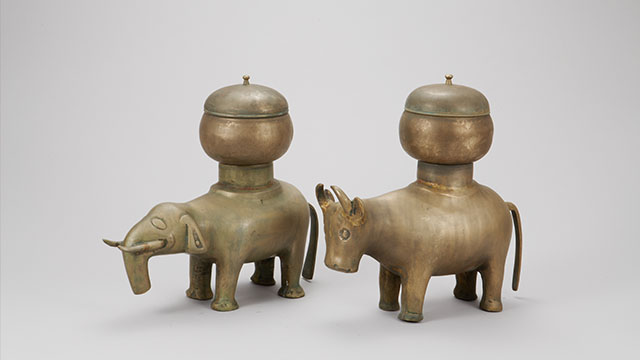
Outside the shrine, the jar storage area held six jars, called 'jun,' for storing water and liquor. Among them, the elephant-shaped jar was called the 'sangjun,' used to hold clear water and unfiltered liquor. Because elephants were perceived as animals symbolizing the warm southern regions (Nanyue), the sangjun was considered a jar vessel suitable for summer rituals. Conversely, the ox-shaped jar, called the Heejun, held clear wine and ceremonial wine. The ox was regarded as a large sacrificial offering, symbolizing richness, fragrance, and abundance. Due to this symbolism, it was used as a jar suitable for spring rituals. Following these symbolic meanings, both the Heejun and Sangjun were placed together on the jar stand for spring and summer rituals.