01

In Search of Beauty

Viewing Information

Period

Nov. 2012 - present
(Inaugural Exhibition)

Location

Gallery 1

Exhibits

Traditional Craftworks

The museum’s opening exhibition in 2012, In Search of Beauty, set the tone for bonte's founding vision: to rediscover the original beauty of Korean culture hidden within the traces of time. Traditional crafts—such as small tables, wooden furniture, and wrapping cloths—once used in everyday life, carry with them the quiet dignity of lived experience. They require no special knowledge to appreciate; their forms and materials speak intuitively, inviting conversation and reflection across generations.
These humble yet enduring objects bear the marks of time, the rhythms of daily life, and the dreams of those who came before us. Through such universally relatable artifacts, bonte museum continues its journey to explore the timeless aesthetics embedded in Korean tradition. We invite you to encounter the essence of that beauty through the works presented in In Search of Beauty.

List of Works

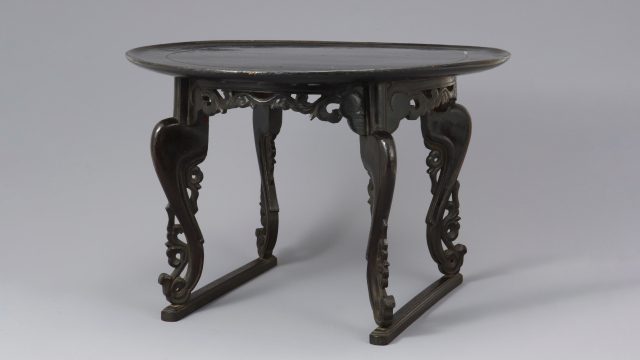
Lacquered Round dining table

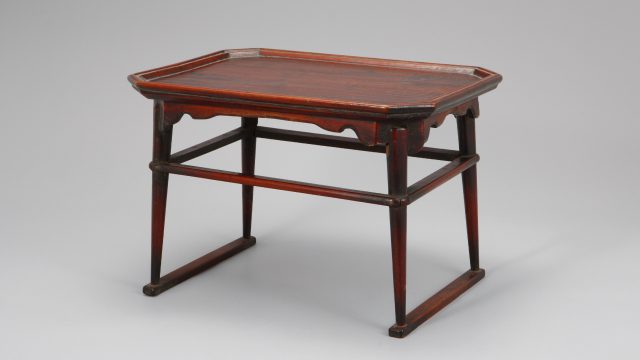
In Korean, the term 'soban' refers to a small table used for dining or as a side table in a room. In traditional homes, the distance between the kitchen and the dining area was considerable, and brassware or earthenware was commonly used. Therefore, the soban was crafted from sturdy and durable wood, capable of withstanding weight while remaining easy to carry. Furthermore, since each person used their own individual table, they were typically made in smaller sizes. Various types of soban exist depending on their purpose, such as those used as trays (to cover the top of furniture), leg shapes, and regional styles.
This particular soban features a circular tabletop, specifically a round table with a relatively wide surface. It was crafted using black lacquerware, a type of lacquer decoration that produces a black color by adding iron oxide to the lacquer during the process. Black lacquerware, along with red lacquerware, which produces a red color, were exclusively used in royal courts or by the upper class. This round soban is considered to have been used by the upper class, given the materials used. This black lacquerware round soban is characterized by its simple circular line carvings on the tabletop, cloud-shaped legs, and elaborate openwork decoration of the four legs, inlaid with arabesque patterns. Each leg has a tenon that fits into the tabletop. Despite its somber color, the round table features detailed decorative elements.

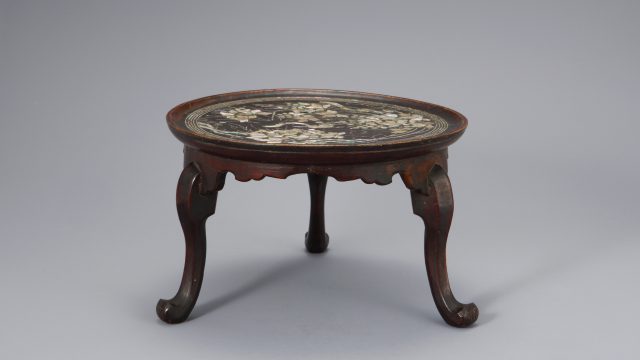
Lacquered
Round dining table

This circular table, crafted from a single paulownia wood plank without any seams, is entirely lacquered in vermilion. The lacquerware technique, known as juchil, involves adding cinnabar pigment to transparent lacquer to produce a red color, a method historically reserved for use in palaces or by the Yangban (aristocracy). The mother-of-pearl inlaid juchil scholar's table features a 'longevity' character at the center of the tabletop, surrounded by four inlaid scholar's emblems. The connecting struts between the tabletop and legs are also engraved with 'longevity' characters, bordered by arabesque patterns. The four legs are of a 'tiger-leg' style, characterized by their elegant curvature.

Lacquered Round dining table inlaid with mother-of-pearl in a pattern of grapensive

This is a round tray with delicate mother-of-pearl inlays on the surface. The tray is adorned with intricate grape patterns, symbolizing abundance and prosperity. The overall design features a transparent lacquer finish, allowing the natural grain of the wood to show through. Typically, the tray is distinguished by having four legs on one side and three legs on the other, with elegant curves connecting the legs to the tray's base in a gourd shape. 

Lacquered Round dining table inlaid with mother-of-pearl in patterns of lotus and turtle

Iljuban is a small bowl with a single pillar, called an iljuban or Dangakban. Because of the weakness of the pillars supporting them, they were used to hold a single bowl of carefully prepared food, such as fruits, medicines, and refreshments, rather than for meals. This mother-of-pearl lotus and turtle patterned lotus leaf daily ban is decorated with mother-of-pearl with delicate veins and turtle and fish patterns that look like they were embroidered on a cloth plate. The entire piece is black lacquered, with a thin line of lacquer running along the rim of the cloth plate. Below the lotus leaf-shaped half, there is one leg in the form of a stem and four feet with kite peak decoration.

Dining table manufactured in Haeju

Haejuban is a type of small dining table made in Haeju, Hwanghae Province. Unlike typical small dining tables with four legs, the Haeju-style dining table features two wide planks for support. These planks protrude slightly outward, providing greater stability by distributing the weight from above and offering visual balance. This particular Haejuban is distinguished by its prominent bat and chrysanthemum patterns on the two wide supporting planks, as well as the arabesque patterns carved into the connecting brackets between the legs and the tabletop. The intricate carvings in the wood enhance the splendor and decorative appeal of this Haejuban.     

Dining tables manufactured in Naju

Najuban is a soban made in the Naju region of Jeollanam-do. It has a similar form to Tongyeongban, but differs in the way the rim, which is the border of the cloth plate, is made and attached separately. Therefore, Najuban has a thicker rim compared to other local soban, and has the advantage of being able to be made larger because the rim prevents the wood from warping. This Najuban has minimal decoration, leaving the wood grain intact for a rustic look, and has cylindrical legs like a typical Najuban, especially the one that features a mid-band connecting the four legs. 

Dodecagon dining table with dog-like legs

Soban is called dog-legged soban or gujukban because the legs of the soban are like the legs of a dog. Gujokban is also known as Chungju ban because it is mainly produced in the Chungju region. The leg shape of this soban, which resembles a dog's leg, also appears in Joseon Dynasty gyojasang and the legs of Jang and Nong. The twelve-angle gujokban is characterized by having twelve angles of cloth plates and is carved out of a whole board together with the cloth plates without a rim around the perimeter. The foot that touches the floor has a treadle that connects the six legs, giving it a sense of stability.

Patchwork
wrapping cloth

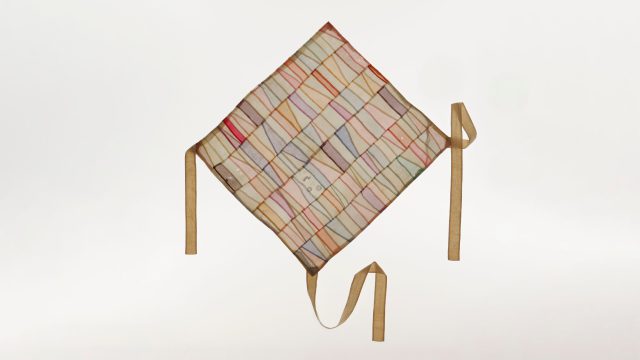
A pieced cloth made from scraps of used fabric, it is made up of colorful rectangular pieces of the same length glued together horizontally to create a layered look. Many moshi cloth are especially common with string, and this moshi sculptural cloth has different lengths of yellow string at each of its three corners. The overall look of this moshi sculpture is bright and cheerful, thanks to the varied but subtle colors of the moshi cloth.

Quilted table cover

A table cloth with a spigot in the center of the cloth, used to cover a table. A piece cloth made of three long rectangular pieces glued together to form a near-square shape, and then irregularly glued together in five pieces horizontally and vertically. The colors of the pieces are arranged in a regular pattern, with a yellow background and red and purple pieces in between. The four sides of the cloth are surrounded by a long yellow cloth.

Folding Screen with embroidery of 'Bu[父]' pattern and Ten longevity Symbols

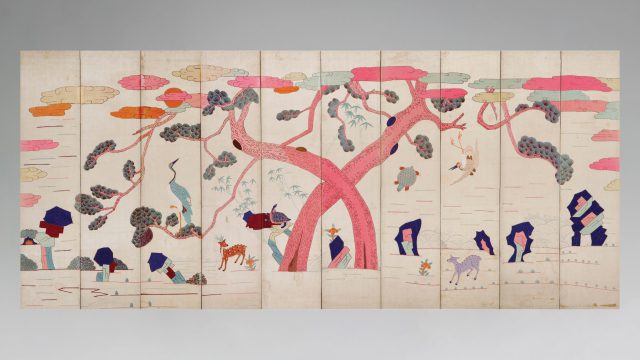
The Sugbu Sibjangsaengdo is a folding screen with two pine trees in the center in the shape of a father figure, surrounded by elements that symbolize longevity: the sun, clouds, turtles, deer, and bamboo. The Joseon Dynasty was based on Confucian ideas and emphasized loyalty and filial piety, which can be interpreted as both loyalty to the king, the father of the nation, and filial piety to one's actual father. The Ten Commandments was a popular folding screen during the Joseon Dynasty, and most were made for the middle or upper classes of the court. They were initially painted in a strict style, but as they transitioned from the late Joseon period to the late modern period, we can see that they gradually became more free in composition and expression, as seen in this folding screen.

Jobok (Official's Ceremonial Attire)

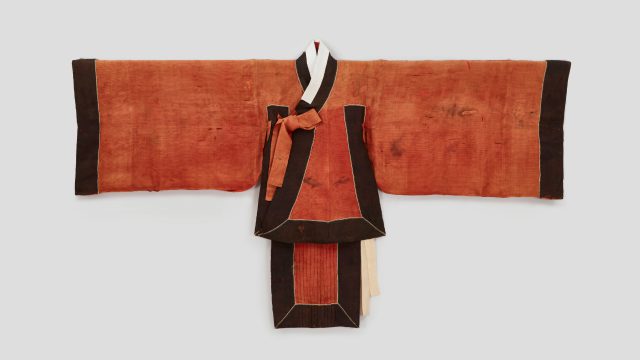
Jobok was a ceremonial dress worn by the royal family's servants and courtiers during celebrations, holidays, and the promulgation of royal decrees. As it was worn by the highest officials, it consisted of eleven parts from head to toe and had to be organized according to the procedure. The royal robe is the equivalent of a robe, a red silk robe made of red silk. Once the robe was complete, it must be worn with the gilded yangguan (golden crown).

Hwarot (Women's Ceremonial Robe)

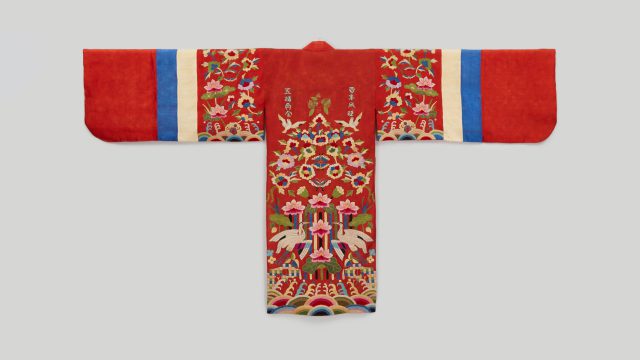
The Hwarot (Women's Ceremonial Robe) was the wedding dress of the upper classes, such as princesses and ongju, but later it was allowed to be worn by the common people and was only worn at weddings. The Hwarot is made of a deep red silk background with virtuous sayings for longevity and good fortune, and is delicately embroidered with symmetrical symbols of the auspicious: waves, mother bee, baby bee, butterfly, lotus flower, and peony flower. The sleeves are wide and have a blue and yellow colored pendulum in the center. 

Box Decorated with
Painted Ox-horn Sheets

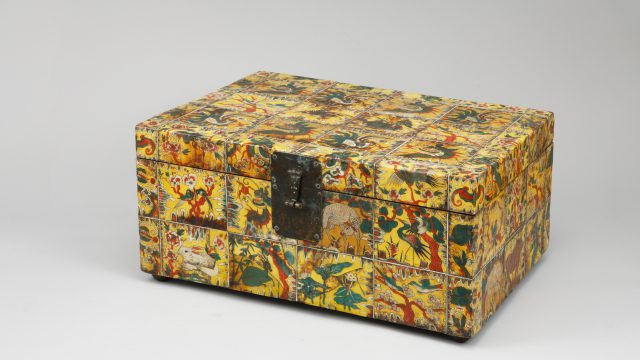
Hwagak is a technique of painting on the back of paper-thin vellum paper made of ox horn, and is characterized by its brilliant colors. This Hwagak Auspicious Pattern Box is a box made with the Hwagak technique and was used to store small items. The cover and body are divided into screens with thin vertical and horizontal division lines, and within each of the divided rectangular screens are highly detailed depictions of ordinal and auspicious symbols such as cranes, turtles, and dragons. The compartments of the cover and body are connected to create a unified whole. At the center of the front is a rectangular iron feldspar with no special decoration. 

Lacquered Two-storied clothes chest inlaid with Mother-of-pearl in patterns of Longevity and Waterside scenery

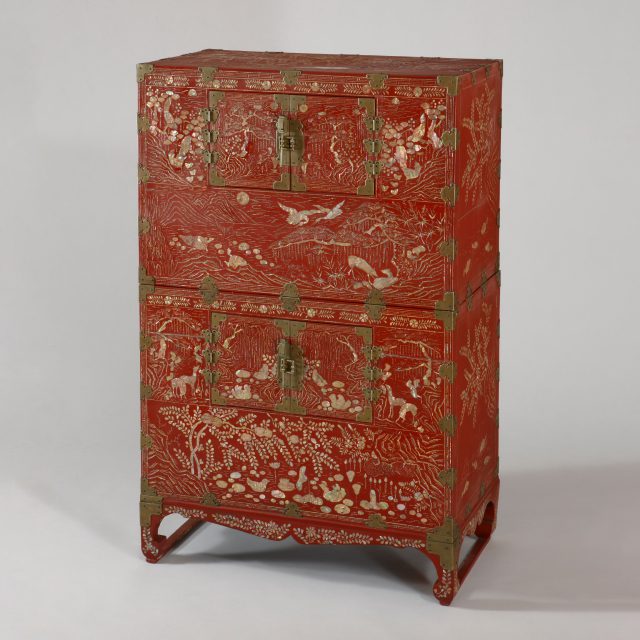
Unlike a cabinet, a nong is a storage furniture that has separate layers and is used to store clothes and other items. It was placed in the master bedroom, which was mainly a woman's living space, and was made up of several boxes, which were then functionally supplemented and developed to make it easier to put things in and take things out. The nong was a typical household item used by the common people, and was a fashionable piece of furniture that captured the spirit of its time. This lacquered double-decker nong is decorated in a rich red lacquer with delicate mother-of-pearl embellishments throughout, suggesting that it would have been used in a yangban household. The front is decorated with the ten longevity symbols of sun, crane, mountain, water, and turtle, while the sides feature a waterside scene with fish and giant stones, and the legs are delicately mother-of-pearl decorated with chrysanthemum gates. Leech feldspar at each corner adds a touch of splendor, and the legs are pierced with bat-style blood vessels.

Wardrobe in a pattern of Plum Flowers

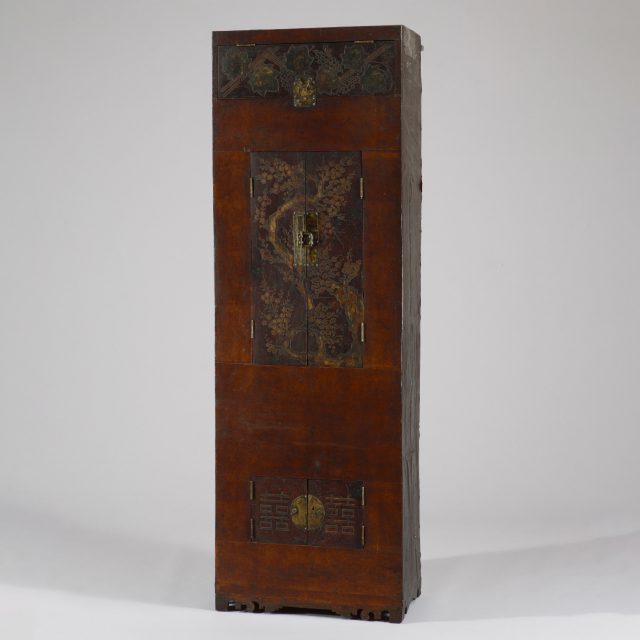
The hanging cabinet is a type of clothing storage furniture for storing scrolls and paintings, and appeared at the end of the Joseon Dynasty with the spread of western clothing. Unlike the jang (欌) and nong (籠), which stored clothes by folding and wrapping them, the hanging cabinet had a hanging rod inside to prevent the clothes from wrinkling and make it easier to take out. This two-tiered structure is usually seen with a lower cabinet below and a tension at the top, and some have additional features such as drawers. This plum blossom patterned hanging rack has grapevines at the top, plum trees in the center, and symmetrical double “double happiness” characters carved into the bottom. It is made of paper on the sides, making it relatively lighter than wardrobes made entirely of wood.

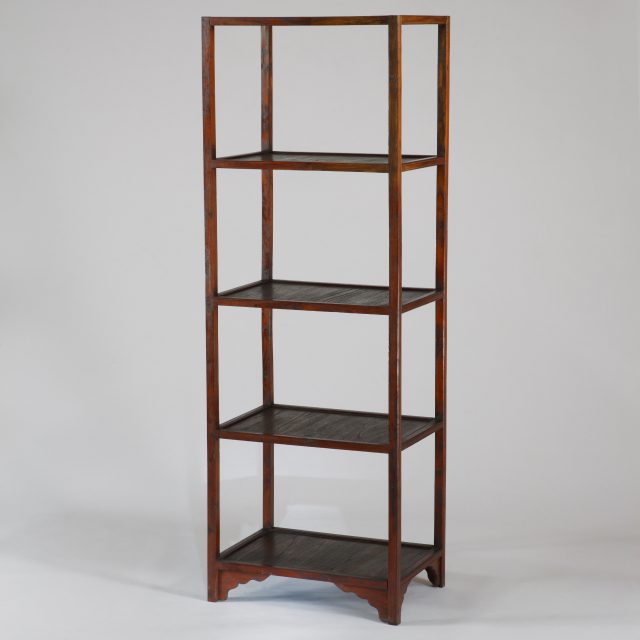
Four-storied shelf

A four-sided table is a multi-tiered piece of furniture made up of tiered boards on slender columns. It usually has three or four tiers, and its streamlined design with straight lines gives it a simple, stable, and comfortable feel. Books, stationery, or objects to be admired were displayed on each tier, and the lowest tier was equipped with a cabinet with a hinged door to enhance its practical function. This four-tiered table was made without any decorations or paint, keeping the wood as simple and frugal as possible. The legs of the four-tiered table are drilled with feng shui[geomancy].

Gallery 1

Traditional Craft

Gallery 2

Contemporary Art

Gallery 3

Chinjesulchan

Gallery 4

Traditional Funeral Rites

Gallery 5

Planned Exhibition

Outdoor

Sculpture Park

Go to top